Advanced
SEARCH
Search our Library
Search this site
315 results found with an empty search
- KVMR Radio News - MineWatch DEIR UPDATE
March 23, 2022 Felton Pruit talks with volunteer Mike Shea about MineWatch shortly before the final deadline for comments on the Draft Environmental Impact Report (DEIR) regarding the Idaho-Maryland Mine. Listen to the interview on KVMR.
- ‘Come together’: Protesters oppose Idaho-Maryland Mine
The Union reports on people attending protest against the entrance to the Idaho-Maryland Mine on Brunswick Road. Concerns range from destruction of the natural beauty in the area to preservation of quality well water and air to the accuracy of the Rise Gold DEIR report to other and better potential uses of the land. The Union | William Roller March 21, 2022 [Excerpts] Gail Johnson Vaughan looks forward to frequent visits from her 10-year-old grandson to show off her property where she lives on Colfax Avenue. “We’re just 1,000 feet from Rise Gold’s mineral rights land,” she said. “A primary reason to oppose the mine reopening is that my grandson wants to have his grandchildren see how beautiful it is here. And he loves drinking the well water, and we have a lots of concerns about the preservation of our wells.” Vaughan questions the completeness of the draft environmental impact report. “We are experiencing an unprecedented 20-year drought, so how can we use past assumptions on the viability of our wells?” she asked. “An adequate DEIR will test a variety of assumptions, including those not made by interested parties.” For photos and quotes see the News article as originally printed in The Union. William Roller is a staff writer for The Union. He can be reached at wroller@theunion.com
- Energy ROI: We Can Do Better - Martin Webb
A YES vote for the mine is a NO vote for climate change. Virtually any other industry could provide a better return on investment. See the analysis by the host KVMR Energy Report, Martin Webb. Mr. Webb reveals the extraordinary power consumption plans planned for the proposed Idaho-Maryland Mine - equivalent to the total energy use of all of Nevada County businesses combined today. With the same amount of electricity, we are already providing 100x the jobs and earnings. There's no reason to damage our water supply or throw out our Energy Action Plan to curb climate change when almost every other industry can provide significantly higher jobs and earnings. Guest speaker Martin Webb is the longtime host of KVMR’s Energy Report (now the Climate Report) and local solar energy expert, with a career spanning several decades as well as ownership of several local solar companies (Plan It Solar, Sierra Solar, and CA Solar Electric Co). This was recorded as part of the MineWatch August 2021 Community Event. You can view the entire meeting here. Read Martin Webb's related opinion piece Analyzing the Idaho Maryland Fudge Factory. View Martin Webb's take on the Draft Environmental Impact Report 83 Negative Impacts, Oh My!
- ★ Sharon Delgado: No climate for reopening a mine
This climate change author explains why opening the Idaho-Maryland Mine will make things worse on a community already struggling with severe climate-related impacts. Sharon Delgado, author of Love in a Time of Climate Change: Honoring Creation, Establishing Justice, clearly spells it out for us. Rise Gold wants to convince us that reopening the mine would be beneficial to the area, but it runs counter to the Nevada County Energy Action Plan. Read in The Union. As we residents of Nevada County struggle to adapt to extreme drought, heat waves, water shortages, periodic power outages and threat of forest fires, Rise Gold is trying to persuade us that reopening the Idaho-Maryland Mine would do us good. Yet regardless of its recent flawed and deceptive survey, the mine would negatively affect the community in many ways, including in our ability to adapt to and mitigate the impacts of climate change. In June, our region got a taste of a record-shattering heat wave that farther north led to many deaths. We are in a historic “severe to exceptional drought,” resulting in depleted reservoirs and mandatory water restrictions. Fire insurance rates are skyrocketing and policies are being canceled as fire season extends to almost year-round and as wildfires become ever more ferocious, burning more acres. Even as we pack our go-bags and create fire safe spaces around our homes, we know that catastrophic forest fires could come at any time. Reopening the mine would only make these climate-related impacts worse. The leaked report of the 2022 Intergovernmental Panel on Climate Change warns of “progressively serious, centuries-long and, in some cases, irreversible consequences” that will impact people around the world with multiple climate calamities at once: drought, heat waves, cyclones, wildfires and flooding, leading to widespread hunger and disease.So far, the Earth’s average global temperature has risen slightly over 1 degree Celsius, which is about 2 degrees Fahrenheit. Just imagine what it will be like if it rises to 3 or 4 degrees Celsius! The panel’s report warns: “Life on Earth can recover from a drastic climate shift by evolving into new species and creating new ecosystems … humans cannot.” Nevada County has had the foresight to respond proactively by adopting the Nevada County Energy Action Plan, which was developed by the Sierra Business Council with support from PG&E in collaboration with Nevada County and community members. The plan, based on scientific climate forecasts in the context of our region, states: “From record temperatures to proliferating wildfires and changing precipitation patterns, climate change poses an immediate and escalating threat to the region’s environment, economic strength and public health.” The plan is intended to “guide local government decisions that will help achieve greater efficiency, reduce costs and demonstrate the county’s commitment to energy independence and community resilience,” and to “inspire residents, businesses and other public agencies in Nevada County to participate in community efforts and maximize energy efficiency, renewable energy, and water efficiency.” This plan should guide analysis and decision-making about the mine as it relates to climate. It points to goals, strategies and ways to implement policies that will enable us as a community to adapt to projected climatic changes and mitigate harm by lowering greenhouse gas emissions. But reopening the mine would take us in the opposite direction. Adapting to climate change means developing resiliency so that we human beings, our fellow creatures and coming generations can survive and thrive as much as possible. This means carefully preserving our region’s air, land, and water. The mine would further pollute our air, replace life-sustaining ecosystems with mine waste, and perhaps deplete our precious groundwater, putting wells at risk and sending millions of gallons of treated wastewater daily down Wolf Creek. Adaptation means generating sustainable forms of livelihood, housing, education, business, agriculture, and more — locally-based as much as possible — and moving away from fossil fuels to justly sourced renewable power. Many community members, local businesses and local nonprofits are working to attain just such a vision. Rise Gold’s extractive business model does not align with these goals. Because it is a global problem, we must also do our part to mitigate the harm of climate change by reducing our regional carbon footprint. The Nevada County Energy Action Plan calls for gradually reducing annual residential electric use by 12 percent. Rise Gold’s projected electrical use would cancel out this goal by annually using electricity equivalent to 5,000 new homes and could strain our already overburdened power grid. Even more significant would be the massive carbon emissions caused by diesel-powered heavy equipment used for: constant construction during the first year and half; ongoing continuous excavating, underground blasting, drilling, rock crushing, loading, hauling, unloading, spreading, and compacting to create engineered fill up to seven stories tall; continuous mine dewatering by pumping, treating and sending millions of gallons of wastewater down Wolf Creek; increased new diesel truck traffic (up to 100 round trips a day, seven days a week, 16 hours a day). This would result in significant increases of greenhouse emissions rather than decreases as outlined in the county’s Energy Action Plan. Please, let’s put this debate to rest once and for all and not waste everyone’s time and energy by pretending we should seriously consider reopening the Idaho-Maryland Mine every time another penny-stock company comes along to propose it. The county has taken a proactive approach with its plan to foster resiliency and mitigate the harmful effects of climate change. Let’s not turn back now. Sharon Delgado is a local retired United Methodist pastor and author of “Love in a Time of Climate Change: Honoring Creation, Establishing Justice” (Fortress Press). Her blog is at sharondelgado.org.
- On the watch: Opponents of Idaho-Maryland Mine seek signatures for petition
The Union reports on a group of MineWatch volunteers who were at the entrance of Valentina’s Bistro in Grass Valley, collecting signatures and speaking to people about opposition to the mine. THE UNION | Victoria Penata March 18, 2022 [excerpts] Janet Cinquegrana says she and her husband have agreed to sell their Grass Valley home and move, if the proposed reopening of the Idaho-Maryland Mine occurs. Cinquegrana was among a group of MineWatch volunteers Friday afternoon who were at the entrance of Valentina’s Bistro in Grass Valley, collecting signatures and speaking to people about opposition to the mine. “Right now, it’s a beautiful spot, but I have doubts that it will remain beautiful,” she said on the mine’s proposed reopening. In addition to holding environmental concerns, she said she is worried the mine’s reopening could cause property values to drop. The petition on which volunteers were collecting signatures Friday read, “Businesses, homeowners, and conservationists in Nevada County are joining together to protect our neighborhoods, our local economy, and quality of life from the Rise Gold proposal to reopen the Idaho-Maryland Mine,” adding that those signing urge the county Board of Supervisors to reject the proposal. This is part of a Week of Action. For more read the complete article in The Union.
- Ray Bryars: A small aircraft airport, really?
This local resident takes issue with an attempt to mischaracterize the nature of the Nevada County Airport in order to minimize its importance or potential impact in the Idaho-Maryland Mine project Draft Environmental Impact Report. This opinion piece was originally published in The Union. I’m gradually working my way through the Idaho-Maryland Mine project draft environmental report and can’t believe the amount of misinformation that I am encountering. The latest is in the Hazards and Hazardous Materials section, on page 4.7-10, under the heading of “Nearest Airports.” The first paragraph states, “The closest public use airport to the project site is the Nevada County Air Park, a small aircraft airport, located east of Brunswick Road and north of Loma Rica Drive, less than one mile (approximately 4,000 feet) from the Brunswick Industrial Site.” By referencing “a small aircraft airport,” it appears that there is an attempt to minimize the importance of the Nevada County Airport. There is no acknowledgment that this is a major base for the U.S. Forest Service and CalFire. The location places the airport 20 minutes from other airports, which during fire season provides robust coverage of Nevada County and adjacent counties. The county website, mynevadacounty.com, has the following information regarding the airport: “Nevada County Airport is home to the Forest Service and CalFire Grass Valley Air Attack Base. This center of wildland firefighting from the air is the permanent location for two Grumman S-2 air tankers that drop fire retardant, and two air attack aircraft that coordinate the efforts of the tankers and other firefighting assets and personnel. Aircraft from Nevada County Airport are on standby, ready to respond to fires throughout the foothills and mountains. When larger fires occur nearer to the airport, many other firefighting aircraft use the airport as a base for operations. Search and Rescue and med-evac aircraft also use the airport year-round for public safety missions.” In addition, I found the airport is used for law enforcement, business, transportation, tourism and education for youth through programs such as the Young Eagles Program. It is shocking that Rise Gold ignores the huge positive benefit that the airport provides by stating that it is a “small aircraft airport.” Does Rise Grass Valley want to minimize the importance of the airport so that we will ignore the fact that they will be transporting and storing explosives within 4,000 feet of the airport and right under some of the flight paths? In the fall of 2021 we had two potentially disastrous fires just below the airport, plus the River Fire just a few miles south. Imagine what it would have been like if the planes that were fighting these fires became grounded due to the possibility of explosives being ignited. Many of us witnessed the great job that the firefighters did and are very aware of the extremely brisk spread that was only brought under control by rapid action by many brave firefighters and the pilots from the Nevada County Airport. It amazes me that Nevada County allows a penny stock speculator with his history of running away from the Banks Island Gold toxic spill in British Columbia, Canada, followed by declaring bankruptcy, can be allowed to hold hostage the residents of Grass Valley and Nevada County. There must be a way to stop wasting everyone’s time and put an end to the possibility of re-opening the Idaho-Maryland Mine forever. I implore our county supervisors to do the right thing for the community and end this whack-a-mole madness. The airport is vital to the safety, vitality and future of Nevada County. Ray Bryars lives in Nevada City.
- Jeff Kane: Nevada County sidewalk conversation
Jeff' wicked wit shines again. Does Rise Gold think of us as "Ignorant Rube County"? They seem to hope so. This opinion piece was originally published in The Union. Hey, I got your mailer about reopening the Idaho-Maryland Mine. Pretty slick. Yup. as it says, the science is clear. The draft environmental impact report calls the mine safe and responsible. Hmm. I read the report, all thousand pages. Safe and responsible? You’re kidding, right? Well, the report didn’t say it in exactly those words. It did say there are issues around noise, traffic, air quality, explosives safety, lowering of well water tables, wildlife, creek destruction, and on and on. But it says most of that can be mitigated. You know, minimized. Most of it? Yeah, but sorry, not all. Nevada County already has some of the most toxic air in the country’s most air-toxic state. That’s not good, so we’ll have our loaders and dozers and 20-ton haulers emit as little diesel exhaust as possible over the next 80 years. There’s just no getting around the fact that our emissions will cause even more discomfort and lung disease than you have now, especially in children and older folks. But we’ll figure something out, and it’ll be a win-win, you’ll see. To show our goodwill, we’ll buy the Ophir Hill Fire District a top-of-the-line fire engine and fund three full-time additional firefighters for the mine’s duration. How’s that for being a good neighbor? Wait a minute. I told you I read the report. On page 541 it says you’re obliged to buy the fire engine and fund the firefighters because of your huge stash of diesel fuel, explosives and chemicals, not to mention drier weather every year. And these other “gifts” you’re promising are contractual obligations, too. Like you love our rustic little community so much, you said, that you’ll pay for a new NID water line to homeowners in the East Bennett area. How kind. Fact is that dewatering the mine may suck those private wells dry. And by the way, you said the report’s “significant impacts” can be mitigated. What about “will” be mitigated? Come on, let’s be serious. Nevada County can’t afford to monitor our work adequately, and besides, is that where you want your tax money to go? Mitigation of mining destruction has always been a joke, anyway. Take a look at our company’s last mine, in British Columbia. The entire bond we posted cleaned up just a little of the mess, and the taxpayers there will be stuck with the rest, more than a million bucks. But really, shouldn’t we all chip in for a good cause? I heard you’re going to hire 312 new employees. How many will be local? We’re planning on two-thirds. But that may change, so don’t hold me to it. And where will the non-local employees live? Are you aware there’s a housing crunch here? Trust me. Your employees will make an average of $95,000, right? Well, actually, to sweeten the pot we’ve already given them a raise. Now the average is $122,000. If that’s the average, how much will the underground workers make? On second thought, never mind. Why am I even asking? I heard that in your last venture you went bankrupt and couldn’t even give 50 of your workers their promised severance pay. Look, we’re giving Nevada County a chance to participate in a historic and enriching venture. What else do you want? The report says the mine won’t significantly affect anything in your county, so if you feel affected it’s insignificant. Why are you so negative? Instead of complaining, you can join us and make a profit. You, too, can own a piece of this great California gold mine for only 67 cents a share. Excuse me, but you’re hard to believe. You’ve already showed us an obviously fake poll, a flier that’s mostly misinformation, and such heavy-handed public relations in general that you must think of us as Ignorant Rube County. Am I right about that? I hope so. Jeff Kane lives in Nevada City.
- ★ Paul Schwartz: Negative Impacts of IMM are too many to list
This retired capital planner has seen plenty of environmental impact reports in his career, and knows a bad project when he sees one. This opinion piece was originally published in The Union. January 19, 2022 Reading the Draft Environmental Impact Report (DEIR) is an exercise in blocking out and ignoring how terrible this project is. The negative impacts this project will have on our community are lengthy, requiring 23 bullets in the DEIR (Chapter 2, 2.5 Areas of Known Controversy, Executive Summary). The consultant goes on to offer mitigations for most of the problems the project causes. All of the mitigations assume Rise Gold is a willing and responsible participant. All of the mitigations assume Nevada County can provide the oversight, inspectors, expertise, legal support, and diligence to camp at the Idaho Maryland Mine (IMM) seven days a week, 16 hours a day and enforce the mitigations an approval from Nevada County Board of Supervisors (BOS) would commit to. If we were talking one, two, or three areas to mitigate maybe we could be successful. Canada, British Columbia governing oversight was not successful and they are on the hook for at least $1.4 million in cleanup costs left behind by a bankrupt mining company lead by Ben Mossman. To approve the project the BOS would have to ignore current guidelines for building height, rezone the property to allow mineral extraction, and allow underground drilling and blasting in addition to approving a number of other permit issues requiring special handling. Special allowances will be needed for grading and development within the 100-foot setback from riparian areas of perennial watercourses and development within areas of steep slopes that are in excess of 30 percent with high erosion potential. If this project were located in an isolated desert or remote valley there might be a reasonable discussion how to work with the property owner. That’s not the case. The IMM is located in a pristine residential area with some light industrial businesses operating behind closed doors. Although the property carries the scars from a history of heavy industrial activity, you only need to drive by and look at it to know there is a better future for it if we choose wisely. The cumulative impact of the 23 “Areas Of Known Controversy” (Chapter 2, 2.5, Executive Summary DEIR) scream out this is an impossible project to execute with any reasonable measure of success in the real setting at Brunswick and Bennett Streets. The proposal has issues with air pollution and greenhouse gas emissions, noise, lights, dust, vibration, truck traffic, explosions, extreme power requirements, millions of gallons of mine water pumped daily into the South Fork of Wolf Creek, and radical changes to the local topography and scenic vistas to mention about 50% of the “Areas of Known Controversy”. I suggest we table this proposal and consider a different use for the IMM property. I presented a different vision in a previous opinion piece. Others have suggested a green waste facility. Let’s add a biopower generation plant to turn our green waste and compostable waste into energy to this idea. Another idea I have heard is a drive-in movie theater and outdoor performance venue. What are your ideas? Surely there are many good ideas for this amazing piece of property that are consistent with our County General Plan, favorable to Grass Valleys sphere of influence, and doesn’t require zoning amendments, variances and special permits. Let’s consider projects that build on our current economy of tourism, green industry, seniors, and recreation. Paul Schwartz, Grass Valley Resident
- ★ Bob Clark: Property Values At Risk
Grass Valley resident Bob Clark did his own research to learn whether his property value would suffer if Rise Gold opens the Idaho-Maryland Mine. The resounding answer was YES. ... Knowing that the three most important factors in real estate values are location, location, and location, I wondered what the impact might be on my home value if all of a sudden it was close to an operating mine. Knowing that our local real estate agents do all of the Grass Valley real estate transactions and that they are the foremost experts on Grass Valley real estate, I called the person who does the largest volume of transactions and has for years. When I asked for their professional assessment of what would happen if the mine reopened, they didn’t hesitate. “Your home value and that of all your neighbors will drop by $50,000 to $100,00.” Still in a bit of shock, I called another high volume agent, and another, and another, and another, and another …. They all 100% agreed: Property values would decline. I went online to see if I could find any fact-based study of what actually happened in another case where a mine was opened in a residential area. After much searching, I found a study done by two PhDs at the University of Minnesota. I called them and they sent me a copy of their study. What they found, based on actual property sales over a nine-year period, was that properties within a one-mile radius of the mine site dropped 20%. But wait, they found that values dropped for up to a 7-mile radius, though less so, as the property was further from the mine site... Read the full op-ed in The Union.
- ★ Martin Webb: Analyzing the Idaho-Maryland Fudge Factory
Local KVMR radio host Martin Webb tells us exactly how Rise Gold's promises of jobs and earnings for locals don't add up. And be prepared to be blown away by the damage the Mine would do to our Energy Action plan to curb climate change. Read in The Union. As a long-time energy professional, local business owner and radio broadcaster of The Energy Report, I was asked to speak to a group about the reopening of the Idaho-Maryland Mine on the subject of energy use. I analyzed multiple sources of information, including reports either paid for, created by or referenced by the mine’s investors, as well as our own Nevada County Energy Action Plan. As a result, I was able to deep dive into claims of estimated jobs and earnings for locals, while also taking a look at overall energy use for the proposed facility. I was surprised. First, note that any estimated local jobs are always based on the proposed mine operating at a “maximum production rate” of 2 million pounds/day. However, Rise Gold acknowledges it’s a made-up theoretical number not based on any technical feasibility report and would take an unknown number of years to reach, if ever. Out of the estimated direct mine jobs, only two-thirds would go to locals, and the highest paying category (19 supervisors and managers) would employ zero locals, as well as the next four highest-paying jobs (geologist, engineer, metallurgist, and scientist). A “local’s average job” at the mine would pay less than the mine’s regularly touted “average job” earnings. The mine would necessitate moving in 100 new non-locals to compete for tight housing, generally making more money than their local co-workers. There is also sweet talk about indirect jobs created, which is the assumed outward ripple effect of even more new jobs and revenue created by the spending of the mine’s proposed operations, as well as by the personal spending of people working for the mine. This is where things go sideways in the mine’s reports. Their economic report bizarrely calls PG&E a local utility, then assigns all $8 million a year in power bills paid as going into our community, and somehow magically compounds that huge mistake into $13 million in total local economic effects. After you correct their blunder to reflect reality, “local vendor purchases” drops from the report’s false “41% of the mine’s total spending” to only 15%. Yes, 85% of vendor spending will go elsewhere. The local indirect jobs numbers collapse. Well, so what? The mine won’t employ as many local people as they say. And they wouldn’t pay them as well. And they don’t know how much they could mine, having done no technical feasibility study, so there could be few jobs. And their reports don’t make sense, using flawed information and admitted guesswork. Still, wouldn’t even 10 new jobs be worth it versus zero new jobs? It turns out, no. Using the mine’s repeated citation of a 2019 Economic Policy Institute report on job multipliers for 179 different industries, mining is practically the worst possible job creator, both in direct jobs at the mine, and indirect jobs around it. Literally, almost any other business model would be better, if jobs are what we want in our community. We have a choice, and in the 21st century we’ve done well without mining. When I looked at the proposed mine’s power use, it would equal all of the entire non-residential power use combined in the county: roughly 50 million kWh/yr. For that same annual amount of mine power (which if used, would destroy our local energy action plan), our county’s very smart and resilient citizens already employ over 30,000 locally, creating $3 billion in local earnings … using 50 million kWh. The proposed mine — for that same gargantuan annual power use — would provide at most a paltry 1% of the jobs and earnings (300 jobs and $30 million) that our local citizens already do, using the ample gold reserves currently buried between our ears. Visit Rise Gold’s website. Locate their jobs information. Find the numerous footnote links to the Economic Policy Institute brief on jobs multipliers from 2019. They love touting it. Notice we have much better industries to choose from, providing far greater local jobs numbers with less risk and more certainty, and without exploding our county’s energy action plan. My recommendation? I myself am a three-time local solar business owner who has created dozens of local jobs. Then those jobs saved our citizens and businesses more money, with roughly around $2 million a year staying here in our county instead of going to PG&E, all from my hard work. And that’s just me. There are currently over a hundred solar and energy jobs locally. And we’ll need many more to hit the county energy action plan … but only a handful of local mine jobs to explode it. Martin Webb lives in Penn Valley. Be sure to check out his other article: Energy ROI, We Can Do Better
- Jonathan Keehn: The Siskon Mine well disaster - quick read
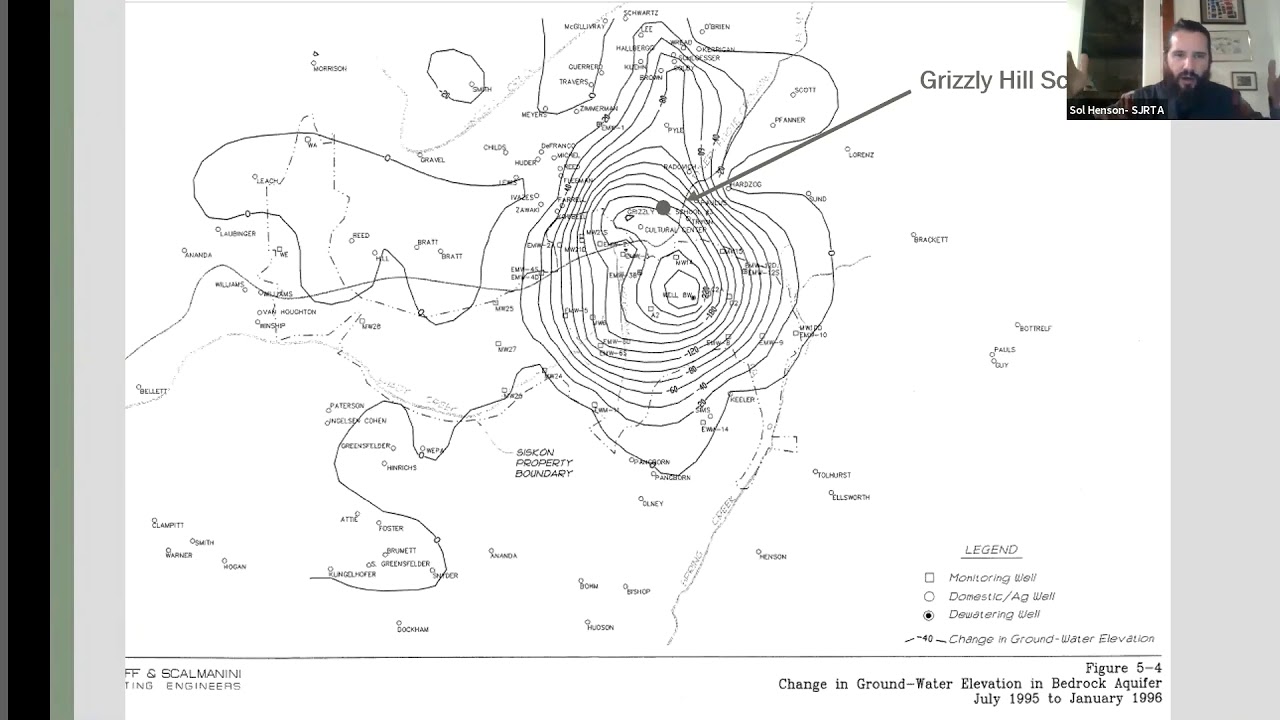
Reopening this local mine ruined wells over two square miles in San Juan Ridge. Months of flooding scoured a creek down to bedrock - killing fish, frogs, and benthic macroinvertebrates. This opinion piece was originally published in The Union. A short story: In the early 1990s, a junior mining company from Canada named Siskon Gold wanted to reopen an abandoned gold mine near North Columbia in Nevada County. Siskon got investors to pay for the most expert hydrogeologists and the best environmental consultants. After several years a complicated draft environmental impact report was produced. Eventually, with many revisions and mitigations, the draft was tweaked into a final report. The county supervisors finally deemed it complete, and granted Siskon a permit to reopen the abandoned mine. Two years later (Labor Day weekend, 1995) the unthinkable happened: The miners hit an unmapped bedrock fault, drained an aquifer, and ruined 12 water wells over two square miles (including the well for Grizzley Hill School). If you put your ear to the well casing, you could hear the sound of water being sucked out of your well. The resulting flood (a million gallons a day for many months) scoured Spring Creek down to bedrock, killing fish, frogs, and benthic macroinvertebrates. Siskon paid to have all 12 wells drilled to a deeper aquifer, requiring larger pumps. The water coming out of these wells is still contaminated with manganese and iron. To this day the Grizzly Hill School must maintain an expensive filtering system to bring the water to safe drinking standards. Siskon went out of business and left town by 1998. One hardly needs to mention that the parallels of this story to the current situation with Rise Gold are clear and ominous. Jonathan Keehn lives in Grass Valley.
- Tony Lauria: Mining history is rife with harmful effects
Should the people living in our county be made to endure the risks of gold mining for the profit of one company? Even considering such a proposal seems unthinkable today. This opinion piece was originally published in The Union. No matter what your stance on the current controversial Rise Gold proposal, gold mining generally is known to be one of the most destructive industries in the world. It can displace communities, contaminate drinking water, hurt workers and destroy pristine environments. It often pollutes water and land with arsenic, mercury, cyanide and other chemicals. It fills the air with tiny particles of silica and asbestos dust that drift far and wide with the wind. It exposes sulfides in rock which react with water and air to form sulfuric acid. It’s estimated that 40% of the headwaters of Western watersheds have been polluted by mining, and acid mine drainage is a major cause. Put bluntly, mining operations have always endangered the health of people and ecosystems. Here’s a noteworthy local example of mining impacts in residential areas; The Lava Cap Mine, just a few miles from Idaho-Maryland Mine: http://www.toxicsites.us/site.php?epa_id=CAD983618893 The real questions are: Should the thousands of people living in our county be made to endure these risks for the profit of one company? Should this one company be allowed to take the chance of ruining the only source of clean water for hundreds of homes? Should this one company be allowed to endanger families with their storage and transport of high explosives over open roads? Should this company be granted the freedom to contribute tons of carbon and contaminants into the air in the form of diesel exhaust and cancer causing dusts, as well as consume massive amounts of our county’s energy and water resources? No one bought their homes here with the disclosure that future drilling and blasting could be happening underground 24/7/365. No one was told the light industrially zoned former mine site could be rezoned to accommodate the heavy industry of mining. No one dreamed that an industry rife with environmental destructive exploitation would be considered worth the risk a century later. I don’t believe these impacts can be mitigated to anywhere near “less than significant.” By now, everyone has received the mailer from Rise Gold as they continue the attempt to sell us on this proposal. Any claims that the draft environmental impact report supports this plan are far from accurate. The fact is, D stands for Draft. This is not a final report. That is why there is a public comment period, whereby educated professionals can analyze what’s in the draft. So far, critics find it to be sorely deficient in everything from the hydrology to air pollution, along with the many other impacts mentioned. Nationally, I see articles saying the loss in value for homes within the mineral boundaries of an operational mine is 20%. This figure could descend to a 100% loss should wells be drained or destroyed. Many local real estate agents completely agree. Millions could be lost in home values. Millions more lost revenue to the county in taxes from those devaluations. How many underpaid, unskilled, underground dangerous mining jobs are worth that cost? I hope for a massive outcry condemning this high-risk proposal at the upcoming March 24 county meeting, along with a deluge of comments on the deficiencies in the draft report. It is definitely a fight to save our water, air and quality of life. Get help and info from http://www.minewatchnc.org. Tony Lauria lives in Grass Valley. This opinion piece was originally published in The Union.
- ★ Jeff Kane: Enjoy breathing? Consider the proposed mine
Dr. Jeff Kane reveals the serious health problems Nevada County suffers due to very poor air quality, then questions the assertion that the proposed mine will mitigate risks and meet air quality "standards". You can also read this in The Union. The valid criticisms that can be made of Rise Gold’s bid to reopen the Idaho-Maryland mine are as numerous as the South Yuba’s pebbles, but in this space I’ll just address its predictable effects on our air quality. California’s air quality in general is already poor. According to the American Lung Association, the five cities in the country with the worst annual particulate pollution and highest ozone levels are in California, and include the Sacramento-Roseville region. California’s most polluted cities are also those most affected by our now-endemic wildfires, which severely aggravate monthly and annual air pollution averages. Ongoing climate change, bringing warmer and drier conditions, intensifies wildfires, so is certain to worsen California’s air quality. Nevada County is even more affected than the state. The American Lung Association gives our community an F grade for ozone levels, designating 105 days per year “unhealthy.” Our county has long been considered “Sacramento’s tailpipe,” as auto exhaust emitted there funnels here. And during the past two summers, wildfires contributed to entire weeks the Northern Sierra Air Quality Management District labeled “very hazardous.” Airborne elements from the proposed mining will include dust, ozone, and noxious particulates and chemicals, not to mention considerable greenhouse gases. The project’s diesel particulates will be mostly of a size that readily enters human lungs. Current and future Nevada County children will absorb more of this than adults do, both because of their more rapid respiratory rate and exposure during the 80 years of the mine’s operation. The particles we’ll all inhale include asbestos, silica, heavy metals, and more than 40 known cancer-causing organic substances. The California Air Resources Board has classified diesel particulate emissions as a toxic air contaminant, and estimates that about 70% of the cancer risk that the average Californian faces stems from this source. Whatever paltry benefits Nevada County might glean from this project, it will certainly damage our health. Our mortality rate from chronic lung disease is already double the rate in California statewide: 69 versus 35 deaths per 100,000 people. Many of us are already at risk simply for our age. According to the 2020 census, one in three of us is 65 or older, compared to the statewide proportion of one in seven. Our heart disease mortality rate is half-again higher than statewide. In 2014 Sierra Nevada Memorial Hospital saw 369 adults and children for acute asthma and admitted 88 at cost of over $3 million, and that represents only one single illness. Although airborne mining emissions will raise the incidence of local pulmonary and cardiac illnesses, with all their personal and financial costs, the proposal’s Draft Environmental Impact Report asserts that none of Rise Gold’s operations, properly mitigated, will violate air quality standards. Mining operations are infamous for circumventing and ignoring mitigations. This report recommends more of them than any public agency can monitor, enforce or, most importantly, afford. The report’s repeated conclusions, “no significant impact,” were written by people who won’t live here the next 80 years. They are based on estimated quantities and arbitrary limits, not on varieties of human experience like anxiety, irritation, aesthetics, and sensitivity to noise and odor. Nevada County can’t tolerate additional air pollution. That bears repeating: Nevada County can’t tolerate additional air pollution. But that’s not the only issue in this outrageous proposal. Considering its predictable injuries to Nevada County’s health, beauty, economics and well-being, no one who values our community can claim it has redeeming value. Jeff Kane, MD, lives in Nevada City. Read more about why the community is so concerned about the mine affect our air.
- Bob Zuelsdorf: Less mining, more tech
Once again a foreign company is attempting to open the Idaho-Maryland Mine, the third time I have seen this “once every decade” fiasco occur. Once again it is being portrayed as beneficial to our community. Another attempt to translate the now-faded glory of the 1800s and early 1900s into today’s very different world, it merely sucks up time and money from the county and local residents rather than living up to the fables Rise Gold portrays. It is uncertain if they actually would resurrect the mine or are simply hyping up the prospect to gather in money from stockholders to feather their nest — and bank accounts — before fading into the woodwork with the funds, as has happened before. It is the wrong business at the wrong time and these new mine owners are once again putting their own benefits ahead of the needs and desires of this community. Yes, one can slant the numbers to show widespread support for another potential environmental disaster such as they have caused in in Canada, and are still in defensive litigation about, for environmental damage. A heavy trucking, noisy, air-fouling industry is far from being in the best interests of the Grass Valley area. And if there is such widespread support as they claim, why is The Union filled with letters from those in opposition, with most of the meager support coming from those with vested interests in the mine? What the area does need is more high tech industries, such as were exemplified by the Grass Valley Group and others, with that legacy now being carried on by the likes of Telestream and AJA Video and being supported by training programs, such as those at Nevada County Media. Greater emphasis on the clean, well-paying jobs they provide would be far more beneficial to the residents of Grass Valley, Nevada City and the rest of Nevada County. Bob Zuelsdorf, Alta Sierra This letter was originally published in The Union.
- Walt Froloff: Rise Gold’s proposal is a scam
It’s old, it’s cold, it’s gold! That’s what this is all about, money for the out-of-range rich and snake oil salesmen, I believe. Even before reading the draft environmental impact report, most will conclude that for Nevada County to even consider reviving a mining project in Grass Valley is on its face strange and repugnant. Strange because to open such an ecologically, economically, community, culturally, and socially disruptive business tortures common sense. Repugnant because it makes no business logic from any position, save the one where proponents raise money, enrich themselves and then flee the country, leaving investors and the people of Grass Valley to clean up potentially enormous damage and harm. As you may know, this scenario played out on a much smaller scale in Canada, where the CEO of Rise Gold with a different company conceived this practice and I think could be a dress rehearsal for here. Perhaps the Board of Supervisors should take a field trip to any of the public gold mine parks for a look into the past. Keep in mind that gold mine closings happened when regulations were non-existent. The mines were closed down then because they became unprofitable. That was when the costs were only considered for the owner’s profitability, not inclusive of the true costs. Back then, owners could just take the money and run, and some did. Today one needs to consider issues such as large wildfires, climate change creating challenges to energy uses and power outages, fire ignition and control, mass population evacuations, dry wells, hazardous waste disposal, toxicity to the environment and containment of contamination, population density increases, regulatory requirements, winds carrying toxic dust from exposed tailing, etc., etc. It is well known that Rise Gold is undercapitalized. I think county money should be spent seriously investigating Rise Gold and the proponents of reopening the Idaho-Maryland Mine. The draft environmental impact report reads to me like a high school report, liberally sprinkling general policy and motherhood edicts from various public agencies, drawing sweeping economic issues under the “volunteer cleanup” action, playing a corporate entity isolation game to disable the chain of liability and slip under regulatory controls. The most egregious violation is the absence of any real cost analysis for any of the worst-case scenarios that must be addressed. To be fair, to even think for one second that an environmental impact report will or even can address all of the issues is absurd. This entire reopening for a few “high paying” community jobs? Absurd. The gold mines were no longer profitable 50-plus years ago and at a time when hardly any of the true costs were addressed in the economics calculation. Today, I don’t believe there is enough gold in the entire United States that can pay for this potential Chernobyl and EPA superfund site. Financially speaking, Rise Gold is grossly undercapitalized and is dangling the jobs carrot — laughable. The only jobs created by the Idaho-Maryland Mind reopening proposal are the county government jobs to evaluate the proposal. We the citizens will remember how our tax money was spent and how quickly our government leaders jumped to jeopardize the community. And how they failed to remember the gold mine reopening debacle in San Juan just a few miles north and a few years back. Where is common sense? Walt Froloff lives in Grass Valley. This opinion piece was originally published in The Union.
- ★ Terry McLaughlin: Skeptical about reopening mine
If you read just one article about the risks of reopening the Idaho-Maryland Mine, let this be the one. By conservative columnist for the Union, Terry McLaughlin. Rise Gold Corp., a Canadian mining company based in Vancouver, submitted an application to restart mining operations at the old Idaho-Maryland Mine in Grass Valley. The permit application describes a drill and blast regime to remove 1,500 tons of rock per day, operating 24 hours a day, seven days a week for approximately 80 years. The two main processing facilities would be on 119 acres at the junction of Brunswick and East Bennett, and 56 acres along Idaho Maryland Road, east of Centennial Drive. Approximately 2.4 million cubic yards of mining tailings and rock waste would be deposited at the two locations. In an April interview with CBS 13, Rise Gold CEO Benjamin Mossman said of the proposed project, “We’ve designed it to have no impact on the environment.” It is difficult to see how such a massive project could have no impact on the environment or residents’ quality of life. At the Brunswick site, the first six months of operation would include pumping 3.6 million gallons of water daily from the abandoned mine shafts into South Fork Wolf Creek. Discharged water would be treated, bringing the treated water to secondary drinking water standards. He has acknowledged that while the water may have no known detrimental impacts to human health, elements in the water could cause pipes to rust and emit a distinct musty odor. ... Read the rest of the article in the Union here. Learn more about community efforts to Stop the Idaho-Maryland Mine. Terry McLaughlin, who lives in Grass Valley, writes a twice monthly column for The Union.
- ★ Sharon Delgado and Dianna Suarez: Water more precious than gold
Water is life. It's also a commodity. We pay $50-$70 an acre foot locally for untreated water; while southern Californians buying water from Sacramento agencies pay at least ten times as much. Treated water in our area is at least $1,270 an acre foot. As climate change worsens, can we afford to let Rise Gold extract and waste our valuable groundwater? Read in The Union. Even in the wake of the tremendous losses locally caused by the River Fire — as heat waves, wildfires, drought and smoke devastate Northern California — Rise Gold continues to inflate the economic benefits of reopening the Idaho-Maryland Mine. While the CEO claims that the silent majority supports it, those of us who are studying plans for the mine see many negative impacts. One significant and irreversible impact could be the depletion of our region’s groundwater, which could add to growing water scarcity and rising water prices in this time of climate change — just when we need to conserve water most. How can we calculate the value of water against the value of gold? Gold is a commodity. Gold prices are high right now, tempting speculators from out of the area who want to profit by extracting both gold and profits. Neither would stay in our community. On the other hand, while water is often treated as a commodity, under natural law water is a right given to all people and all parts of creation to sustain life. “Water is life.” Yet fresh water is becoming scarcer … and more expensive. According to NID documents, an acre foot of untreated water varies in price but averages from $50 to $70 locally. The Sacramento Bee reports that Sacramento area water agencies are selling water to Southern California at $700 per acre foot. How much is an acre foot of water? It is a volume of water the size of an acre, 1 foot deep. One million gallons of water equals 3.07 acre feet. As we live through another drought, with the value of water rapidly increasing, dewatering local groundwater to reopen the Idaho-Maryland Mine might mean loss of economic and ecological value to our community. Using simple math, we can roughly estimate the economic value of groundwater slated for extraction. According to Rise Gold’s Technical Report, beginning mine operations would require draining the mine shaft by pumping out 2,500 acre feet of groundwater (81,433,250 gallons). Based on current NID prices, this means discharging between $125,000 and $175,000 worth of water down Wolf Creek into Bear River during the first six months of operation (2,500 acre feet x $50 to $70). Then, to keep the mine shaft clear, inflow of groundwater to the mine shaft, estimated at 1,375 acre feet (44,788,287 gallons) per year, would have to be pumped out continually. The next six months would see $34,300 to $48,000 down the creek and then between $68,600 and $96,000 would flow down the creek annually (1,372 acre feet x $50-$70). Within 10 years, close to 500 million gallons of water, worth a whopping $776,700 to $1,087,400, could be lost to our community — a million dollars’ worth of precious water down the creek in the first decade! This would go on for the next 70 years thereafter. Billions of gallons of water, worth millions, would be dumped down the creek and out of our community. Meanwhile, community members whose wells are dewatered would pay ever-increasing rates for NID-treated water instead of drawing water out of their own wells, water that has been cleansed by Mother Nature as it percolates down to underground aquifers. (NID rates for treated drinking water during this drought vary from $.0039 per gallon for the first 500 cubic foot of water and $.0049 per each additional gallon, which adds up to between $1,270 and $1,596 per acre foot.) Another fun fact: In only 35 years Rise Gold would dewater and discharge enough water down Wolf Creek to fill Scotts Flat Reservoir to capacity. We must also consider the ecological value of groundwater lost due to the mine. We don’t see groundwater, so why does it need to be recharged? According to the U.S. Geological Survey: “As part of the water cycle, groundwater is a major contributor to flow in many streams and rivers and has a strong influence on river and wetland habitats for plants and animals. People have been using groundwater for thousands of years and continue to use it today, largely for drinking water and irrigation. Life on Earth depends on groundwater, just as it does on surface water.” According to NID’s website: “Nevada Irrigation District encourages wise use of water. Conservation and water use efficiency is important to preserving our precious water resources. Water is needed for drinking water, household use, growing food, commercial and industrial uses, groundwater recharge and the environment.” Rise Gold’s plan is the reverse of recharging groundwater. Draining groundwater could deplete our aquifers, which would otherwise provide well water and contribute to supplying our local lakes, creeks, ponds, wildlife, trees, and vegetation with the water they need to thrive. Nevada County has been a water-rich area, with lakes, rivers and creeks contributing to its natural beauty and abundance of wildlife. But our shrinking snowpack, historically low reservoirs, record-breaking heat, smoke-filled skies, and parched lands and forests make clear that times are changing. Future climate projections are dire. Let us not compound these problems locally by letting Rise Gold extract and waste our valuable groundwater. Water is more precious than gold. Sharon Delgado lives in Nevada City. Dianna Suarez lives in Colfax.
- ★ No State Monitor for Mine
How will Rise Gold be held accountable for water discharge quality if the mine opens? Well...they'll self-test and write their own reports. Are we comfortable with that? Reporter Rebecca O'Neill from The Union explains how it works, but there were a few details we thought deserved a bit more clarity, so we’ve made a few comments of our own at bottom of this page. Read it in The Union. Full text copied below. The Union NEWS | July 30, 2021 Rebecca O'Neil roneil@theunion.com NO STATE MONITOR FOR MINE: Water quality board to rely on Rise Gold for regular reports, environmental assurances The Central Valley Regional Water Quality Control Board that may issue limited threat discharge permit would rely on Rise Gold for regular environmental reports The next stage of the possible reopening of the Idaho-Maryland Mine hinges on the release of a draft environmental impact report, started last year by Raney Planning & Management. If that report states the Rise Gold Corp. project poses no “significant” risk to taxpayers, the company will move one step closer to receiving the limited threat general discharge permit from the Central Valley Regional Water Quality Control Board — a requirement to operate the mine. The specific permit Rise Gold hopes to acquire would allow for 3.619 million gallons (5.6 cubic feet per second) of water to enter Wolf Creek every day. According to the project’s hydrology report, Rise Gold Corp. anticipates 1.224 million gallons (1.9 cubic feet per second) will be pumped to the surface from inside the mine in a settling pond on a daily basis. The report estimates the mine will consume 123,000 gallons of groundwater daily through water vapor used in ventilation, cemented paste backfill, dust control and due to gold concentrates being transferred off site. The rest — 1.101 million gallons of “underground mining service water” — will go to Wolf Creek (1). Although mining requires blasting rock, which contains various elements, to extract precious metals and minerals, Rise Gold has promised to return the water to Nevada County residents in better condition than it entered. Water removed from the site would be treated through aeration followed by filtration through a manganese dioxide filter (2) in a man-made pond on the site before an estimated 500-1,200 gallons per minute are discharged into Wolf Creek. The company behind the mine’s tentative reopening, and its CEO Ben Mossman, have committed to removing the arsenic in the sand tailings at the mine’s Centennial site. According to Mossman, the state’s Department of Toxic Substances will oversee the company’s “voluntary” clean up (3), left over from older mining practices that ended in 1956. Mossman said he trusts his hydrologists (4), but that the state’s water control board takes measures to keep corporations like Rise Gold Corp. accountable. NO STATE PAID HYDROLOGIST John Baum, an assistant executive officer at the Central Valley Regional Water Quality Control Board, called his employer a regulatory agency that enforces the water quality laws of California. The water control board works with the identified dischargers at a site to ensure compliance with those laws. Baum said the permits establish expectations for the company’s self-monitoring and testing of those discharges to protect California at large. “The permitting process requires that the discharger understand their site, the associated hydrology, and constituents within the water proposed or being discharged,” Baum said. “The frequency, locations, and constituents to be sampled are tailored for each site.” Baum said the discharger may hire consultants to prepare documents for the permit application and to meet the requirements once the permit is issued. Those consultants must meet substantial qualifications expectations. Ultimately, Baum said there is no state-paid hydrologist that will be monitor the mine on a regular basis. “The discharger — and their contractor — developed documents that are then submitted to our technical staff for review to ensure compliance,” Baum said. “If a discharger is out of compliance with the regulatory requirements, we start with warnings, but there are increasingly punitive actions we utilize to persuade them to obey.” Baum said his organization prefers to “cooperate” with dischargers, but will issue financial penalties “when the situation dictates doing so.” Baum said the water quality control board breaks mine sites into three categories: active, inactive/closed, and inactive/abandoned mines. “There are likely hundreds of old, inactive and abandoned historical mine sites of all shapes and sizes in the region that aren’t documented,” Baum said when asked how many mines the Central Valley Water Quality Control Board oversees. His staff knows of three active mines in Nevada County under permit: Hansen Brothers Enterprises Greenhorn Creek operation (sand and gravel), RidgeRock Quarry (crushed stone and aggregate), and the French Corral Mine (gold). Baum said there are a number of other mines which are either inactive or legacy clean-up sites where the water board has a regulatory oversight role. “Inactive sites may also be a cleanup site if water quality issues have been identified,” Baum said. The legacy clean-up sites are: Empire Mine State Historic Park, Idaho-Maryland Mine project, Lava Cap Mine, Malakoff Diggins State Historic Park, North Star Water Treatment Facility (for both the North Star Mine and the Drew Tunnel), Spanish Mine and the Spenceville Mine. Rebecca O’Neil is a staff writer with The Union. She can be reached at roneil@theunion.com Kudos to Rebecca O'Neil on a very professional piece of reporting about a topic that is critically important to our community! For the sake of accuracy, we've added just a few points of clarification to help our community members when they talk about this issue with others. These notes are courtesy of Ralph Silberstein, President of Community Environmental Advocates Foundation. (1) Application documents indicate that 1.9 cfs (1.2 million gal/day) or more will go into the South Fork of Wolf Creek, not Wolf Creek. (2) Filtration will include more than just manganese. Both iron and manganese will be oxidized and filtered out. It is also likely that arsenic and other constituents will be removed as well. (3) The CA Department of Toxic Substances officially calls this cleanup a Voluntary Agreement (VA), but this action is also being taken because the U.S. Environmental Protection Agency (EPA) had a pending Superfund designation for this property. They gave Rise Gold a conditional deferral, postponing that action as long as the DTSC VA work is getting done. (4) Mossman's hydrologists acknowledge that they are making assumptions, and that they are often working within the dictates of the clients input. For example, the ground water model was based on only 25 years of an 80 year project.
- ★ Josie Crawford: Forever issues plague mines
If the world's largest mining company with strong ties to Grass Valley hasn't cleaned up its legacy mining problems, what makes us think Rise Gold and government regulators will be more responsible this time? Local biologist, Josie Crawford, tells the harrowing stories and how it took years of costly litigation and expensive treatment plants to begin to resolve the messes. Read in The Union. Merry Byles Daley used to walk her students from Hennessey School to Memorial Park to play and learn in the creek. That is, until the day the classroom tadpoles died from the creek water she added to their aquarium. The creek was Magenta Drain, named for the color of its water when it came out of the ground. It was the color of acid mine drainage and came from Empire Mine. Arsenic, manganese and iron were in Magenta Drain. These heavy metals contaminate our soil and water. If the Idaho-Maryland Mine reopens, these are the same metals we will need to deal with during their operation and forevermore. Gold often occurs with rocks that contain sulfides. When sulfides contact water and air, they form sulfuric acid which leaches heavy metals from the rocks. When the mines closed, miles of tunnels filled with rainwater and began draining into the creeks. Acid mine drainage is considered the most serious threat to streams because of its toxicity. And it is forever. There are a lot of songs and stories that tell us just how long forever is. Here are the short forever stories of acid mine drainage from North Star, Empire and Idaho-Maryland mines, and the struggle to get accountability. Newmont Mining Corp. owned North Star and Empire Mines when they closed in 1956. Heavy metals contaminated Magenta Drain and Little Wolf Creek. Agencies were aware of the high level of metals since 1981 yet did little until 2011, when a treatment plant was built at Empire Mine State Historic Park . Thirty years! It is a similar story with North Star Mine. Three mine features were discharging effluent directly into Wolf Creek. Then, in 2000, the Drew Tunnel was accidentally punctured during a construction project and effluent flowed into the Grass Valley wastewater treatment plant, overwhelming it during storms, resulting in numerous sewage spills with heavy metals into Wolf Creek. Our beautiful creek. This went on for 14-plus years! Yes, I am shouting. These mines closed in 1956 because the price of gold fell, and costs increased. This will happen again. Mines close when they are not profitable, no matter the owner. A small corporation may go bankrupt and leave cleanup to the taxpayers. What would a large corporation do? Newmont Mining Corp., the largest gold mining company in the world, did not go bankrupt. They kept their mineral rights and some property here. Newmont has deep roots here. North Star was its first gold mine. Yet when effluent from those mines — with arsenic, manganese, iron, zinc, lead, and copper — spilled into Magenta Drain in Memorial Park, where you and your children might have played, and Wolf Creek, where some of us fish and swim, and the wastewater treatment plan, where your poop and metals were spilled into Wolf Creek because of Newmont effluent, did Newmont rush to clean it up for the people of Grass Valley? No, they did not. It took years of costly litigation, a grand jury investigation and some expensive treatment plants to begin to resolve these messes. In 2014, a chilling grand jury report addressing the problems of Lava Cap Mine, North Star Mine and Empire Mine found that for over 30 years, federal, state and local governmental agencies failed to coordinate, communicate, accept responsibility or properly enforce cleanup and abatement orders and legal settlements. And that the health and welfare of residents and their water quality may be compromised. In 2011, Newmont and the state park built the Empire Mine treatment plant. Newmont built the North Star Passive Treatment Project in 2015. Rise Gold is planning a more active, higher chemical treatment plant for dewatering the tunnels. The problem is that these problems will never go away. Spills happen — to creeks and people. This water will need to be treated forever. Mine tunnels will fill, rupture, leak and leach heavy metals forever. We can’t predict when or where or if anyone will notice or take responsibility. If the world’s largest gold mining corporation, with strong ties to our community, is not moved to clean up its legacy problems, then who will? If the agencies charged with regulating are continuously understaffed, who will enforce cleanups? Who will pay to treat these sites forever? Like many fevers, gold fever can cloud the mind. In the quest for quick gain for ourselves or our community, we may forget the long-term costs of mining. They are many. Some are metals. They are forever. My name is Josie and I speak for the creeks. Josie Crawford is a biologist and the executive director of Wolf Creek Community Alliance. Thanks to Dale Peterson, she lives on Wolf Creek.
- ★ Randall J. Newsome: Thar’s gold in those promises?
It takes a considerable amount of magical thinking to believe Rise Gold will ever create a single job. The company is grossly undercapitalized and their average worker salary calculation is very misleading. This op-ed by retired bankruptcy judge, Randall J. Newsome is well worth the read. Of all the lofty promises Rise Gold has churned out over the preceding months, none has been more ballyhooed than the number of jobs the mine would create, and the $94,000 average annual wage they’ll pay. Before anyone runs to get in line for one of these dream jobs, let’s take a closer look. First, it appears to require a considerable amount of magical thinking to believe the company will ever create a single job. According to its most recent SEC 10-Q report, Rise had less than $400,000 in the bank as of Oct. 31, 2021. By its own reckoning, it needs to plow $100 million into the facility before it can mine its first ounce of gold. It is grossly undercapitalized, to put it mildly, and teetering on the brink of insolvency. Second, the $94,000 number is totally misleading. According to its March 2021 economic impact report, Rise estimates that it will employ “312 people in Nevada County at full operating levels.” Note that it may take years before “full operating levels” are reached. Putting that aside, the company says that its annual payroll (not including benefits) for these 312 employees will be $29,220,000. It provides no explanation for how it arrived at this number. Rise then provides a list of job categories and an estimate of employees per category. What it doesn’t provide is detail as to the average pay for each employee in each category. Only 213 of the potential 312 employees would be local hires, and of that 213, 162 of them would be “local trainees.” Does anyone really think that Rise is going to pay a trainee $94,000 a year? Read the rest in The Union Randall J. Newsome lives in Nevada City.
- ★ 83 Negative Impacts. Oh My!
KVMR Radio Host, Martin Webb reacts to the Draft Environmental Impact Report for the Idaho-Maryland Mine by the numbers and what that means to our small community. View the PDF or watch the video (run time 9 min). UPDATE: The County as extended the commenting deadline to April 4, and rescheduled the public comment meeting to March 24th. This video may refer to the original dates.
- Terry Boyles: The unforgivable loan
The Rise Gold mine reopening controversy is a microcosm of choices the human species must make to keep on living here, happily, on planet Earth: Do our local residents and those who visit care about the environs or a lucrative but dirty temporary industry? In her book, “Braiding Sweetgrass,” Robin Kimmerer relates the indigenous practice of “honorable harvest” to our present day modes of consumption. “Take only what is given, only what is needed,” “never take the first you see, it might be the last,” (I paraphrase). While it is difficult to measure and nearly impossible to practice in modern life, the consequences for ignoring the hard-earned lessons of native faith traditions are no less real. The true long-term costs of production (farming, mining, manufacturing, etc.) are seldom, if ever, entirely passed along to the consumer. Mining is only the most obvious example of unsustainable human activities. It doesn’t take a genius to realize there is only so much gold, oil, coal, manganese, etc., in the ground. The local gold is among the last known deposits on Earth. However vast, and however clever we become at extraction … the Earth is finite, while, hopefully, humanity is not. Economic activity (profit, jobs, spending) is but one measure of a successful society. But present day fixation on numbers like GDP only engenders further destruction of not only the health of the planet but our own physical and mental health. Are we, the highly productive Americans (according to our present measure of GDP), as happy, healthy and ultimately secure as we could be? Spending on health care, defense and finance count generously in current measures of economic success, but provide little of what people want in life. Other numbers that reflect more than the mere movement of money are needed. Progress in life expectancy, job satisfaction, freedom, transparency, health, charity, etc. — the “happiness quotient” (America is No. 19 and dropping) — should be reported alongside GDP and the DOW. If the negative economic costs to the environment, climate, to our health, and to our very future were assessed by our scientists, economists, businessmen and posted on the front page daily, we might make very different decisions how to work, consume and vote. Our current lifestyle is subsidized by an unforgivable loan from the future planet that makes the national debt look like a mere pittance. Our imminent conversion to more sustainable electric energy will in turn require mining precious minerals like lithium (for batteries) at least until alternative technologies are hopefully developed. Whose backyard will these extractions destroy? More efficient energy, transportation and infrastructure, and less destructive farming, etc., all require diversion of human capital, which unlike the planet’s resources, is nearly limitless. Nobody wants to pay more for food, power and consumer goods now. But rest assured, the consequences of inaction will be dire for future generations. Difficult, often painful life-changing choices face us. Which brings us back to our gold mine. Is it worth it? Gold, however precious, has little real value to humanity except as a marker of wealth. Its use by industry is dwarfed by current production and existing stockpiles. In a world of digital currency, gold-backed securities now seem rather quaint. We could just leave the gold in the ground (there’s a term for this … “green gold”). The money not spent on remediation can collect interest forever, while the gold is still as real and valuable to those who believe in it. Entities like Rise Gold answer only to their stockholders and will spend as little as possible to minimize their impact. Will the real long-term, costs to the community and environment ever be assessed from their bottom line? Terry Boyles lives in Penn Valley. This opinion piece was originally published in The Union.
- Lessons Learned from The San Juan Ridge Mine
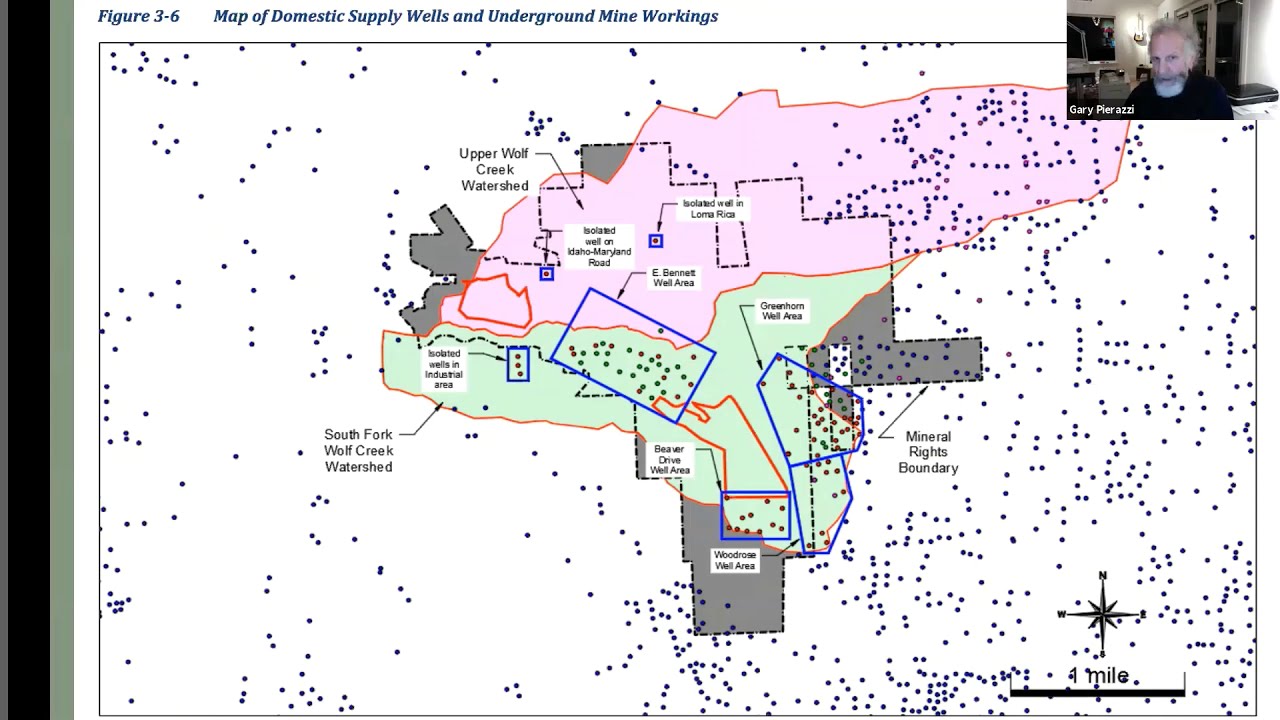
Listen to a talk given by Sol Henson from the San Juan Ridge Taxpayer's Association, during the MineWatch/CEA Foundation December Community Event. Full transcript follows. I've been with the San Juan Ridge Taxpayers Association,since roughly the time that the San Juan Ridge Mine submitted their application to mine the North Columbia Diggins in 2012. You just saw a really a great presentation talking about what initial dewatering and maintenance dewatering of a mine operation can do to our aquifer. I'm here to give you the cautionary tale of what can happen with catastrophic dewatering that can absolutely happen with the Idaho-Maryland Mine as well. The time I'm going to talk about is actually a previous version of the San Juan Ridge Mine, which is known as Siskon Gold that actually got permitted in 1993 to mine the North Columbia Diggins. Now the North Columbia Diggins Mine is a very similar kind of mine to the Idaho-Maryland Mine. The Idaho-Maryland Mine is a hard rock mine and it's in fractured bedrock - in a fractured bedrock aquifer. The San Juan Ridge Mine is… it's actually in gravels, but it's cemented gravels, so actually acts very similar to what you would see with the Idaho-Maryland Mine. I would say the major difference between the Idaho-Maryland mine proposal and the San Juan Ridge Mine is that on the San Juan Ridge, we're talking about hundreds of wells, and the Idaho-Maryland Mine is an urban area. Talking about over a thousand wells potentially impacted. So that's a massive difference. This is a map. It's similar to the Idaho-Maryland Mine, but this is our own mine property out on the San Juan Ridge. You can see the mine property is actually this kind of rhinoceros-type shape that is in dark gray. Off to the West you'll see Tyler-Foote Road running past Mother Trucker’s. If you notice San Juan Ridge and then off to the East is Lake City Road, and right in the center - kind of the epicenter of the the whole impacts of this project - is Grizzly Hill School and the North Columbia Schoolhouse Cultural Center. I just want to point out these dark, black lines. The black lines are actually earthquake faults that run through the property at depth. These are very important because many of them have water running along it. If you breach one of those earthquake fault lines, then you can have some catastrophic dewatering events. The other thing I want to show is this two-mile boundary around the mine property. That's a zone of impact - an area where wells could be impacted by underground gold mining. This became very significant for us and I can talk about that some more. The red square is going to be the focus of the next couple slides here. Before we switch to the next slide, I'll say that… Siskon Gold was permitted in 1993. They were only operating for a little over a year when on Labor Day 1995, They blasted into one of these earthquake fault lines and caused a massive dewatering. What you're going to see is like a topo map, but it is a map of the ground water levels of our area before the catastrophic dewatering event. Each topo line is 500 feet. And for reference, there's Grizzly Hill School. This is what our healthy aquifer looked like until the 1995 event. Earlier, you heard that great term the “cone of depression”. The cone of all the water going into one area where they're mining and intercepting water. They intercepted a massive amount of water right there just to the south of Grizzly Hill School, and it acted as a drain - draining that whole area of water. The water table dropped around 300 feet right in the center of that cone of depression. As a result about a dozen wells were lost and nobody actually knows the amount of water that was pulled out of this mine as a result. They estimate around 6 million gallons a day, which seems like an underestimate to me, but that caused a dozen wells to go dry and untold impacts on many other wells. Grizzly Hill School and the North Columbia Schoolhouse lost their wells and Grizzly Hill School… well… Siskon Gold never admitted fault to causing these wells to go dry. But they did re-drill about a dozen wells. What we learned about our aquifer, unfortunately, is as you go deeper for your wells, your water quality gets worse. It's not to say that there were contaminants coming from the mine, but it's just that when we re-drill to deeper depths in this area, our water quality got worse and worse. If you have a well… If you have good water quality… If you have good water quantity… It is truly a precious thing, and you never want to mess with that. A re-drilled well is absolutely no guarantee that you'll have what you currently have with your well. Grizzly Hills School suffered with water quality issues ever since their well was re-drilled. They drank bottled water off and on for a decade. To this day they have an incredibly expensive water facility to filter their water. Also, I would like to say that there are also unknown health impacts to the impacted wells when people had their wells re-drilled. There's a number of people that have had health issues. Those are just very hard to quantify. Did that come from the re-drilling of those wells? Here you'll see that's basically how the water levels changed. Before we had these broad topo lines running through. Then, after that project, we basically just had this big hole right where the mine project was - where all of the water got pulled into. Some key takeaways from the 1995 event is that bedrock aquifers are highly complex. Anybody that tells you they understand what's happening in a bedrock fractured aquifer is not being forthcoming. They're highly complex and truly, the reason we can show you all those fault lines in that map is because of this catastrophic dewatering event that we experienced. We learned that water moves along fault lines and fracture lines, Those are water bearing areas that if blasted into, can cause catastrophic events. We learned that re-drilled wells don't guarantee a decent replacement as with Grizzly Hill School and a number of other wells. And just that permanent aquifer damage as possible. Pathways change underground when you start messing around down there. A key approach for use was that we took this information from the 1995 event and used it to address the 2012 proposal. We pushed for - and won and effort to get a County-facilitated and approved groundwater monitoring program with input from both the mine and the community. This allowed us to have a say in what should happen before an EIR came out. We had a water monitoring program pre-EIR for water quality and quantity within the two-mile boundary of impact around the mine property. This created a baseline for what wells look like over time. You can't just go out and do one measurement of a well. They change across the year, and they change from year to year. And they change both in quantity and quality. Earlier, it was mentioned that the Idaho-Maryland Mine plans for 2 million gallons a day in maintenance dewatering, which is an incredible amount of water. If you think about 6 million gallons a day for a catastrophic dewatering event 2 million gallons is a third of that amount everyday coming out of your aquifer. The other thing to note - you can't really say you're going to have “one to two million gallons a day” of de-watering out of these mine tunnels… because these mine tunnels are going to be getting expanded and growing and getting bigger. The larger the mine tunnel network, the more water you're intercepting. I would imagine there's a much bigger range in the amount of water that's going to be coming out of this - especially near the end - - when they've mined it. For the San Juan Ridge Mine, when they said they would do the final workout/build out of the mine, they were going to be intercepting seven million gallons a day. That's a million gallons a day over what they said was occurring from the catastrophic mine dewatering. These are really big issues here in regards to wells. In conclusion, I’d like to say that our water monitoring program had about a hundred wells. It was a really great program to get a baseline for people's wells… well ahead of any kind of mine operation, and its something I encourage the community consider doing for the Idaho-Maryland Mine as well. Thank you very much.
- Why The Risk to Wells Is So High
Listen to a talk given by Gary Pierazzi, a local resident, during the MineWatch/CEA Foundation December Community Event. Full transcript follows. Welcome, and thanks for being here tonight. As a resident whose sole source of water is my well, I'm really concerned about the impacts the Mine could have. There are a large number of private wells in the Idaho-Maryland Mine mineral rights area and hundreds more in the surrounding area. Residents are very concerned that if their wells fail, run dry, or become contaminated, they'll have to find another way to get water. Rise Gold has claimed that other than a small number of wells, the project won't have any significant impact on resident’s wells... … water supply, but here's the thing. They can't promise that because groundwater hydrology is uncertain, and they could only provide predictions and assumptions. So tonight, I'll talk about the following issues related to residential wells, which will include residential well locations, dewatering, well mitigation measures, hydrological studies, impacts to residential wells, and what is needed to protect the wells. So let's start with well locations. This map shows the mineral rights boundary for the Idaho-Maryland Mine. It's designated in this black dotted dashed line. And that's the boundary. According to the California Department of Water Resources, there are over 300 domestic wells within a thousand feet of the Idaho-Maryland Mine mineral rights boundary. The Department of Water Resources online database identifies over 1200 private, domestic wells that are located within one to two miles of the project. Rise Gold believes that there are only 26 wells that can be impacted by dewatering of the Mine. Those wells are located along East Bennett Road shown on this map here outlined in the large blue rectangle in the center of the map. The map also shows the Upper Wolf Creek Watershed in pink and the South Fork Wolf Creek Watershed in green. Moving on to dewatering. For this mining project, Rise Gold will need to dewater the existing mine workings. Their groundwater analysis report includes the following information. “Before exploration and mining can proceed, the volume of water contained in existing workings must be removed from the underground workings. Removal of the static water within the flooded mine workings is referred to as initial dewatering. Once the initial dewatering is completed, continued pumping is necessary to remove groundwater that will constantly flow into the Mine through fractures within the bedrock. For the purposes of this report. it will be referred to as maintenance dewatering.” This little chart shows that there's two parts: the initial dewatering, and maintenance dewatering. And the pumping rate in the initial dewatering is 2,500 gallons per minute. And that will be 24 hours a day, 7 days a week, for six months. Bringing the total to 3.6 million gallons being pumped per day, or 657 million gallons within a six-month period of the initial dewatering. Then, they move on to the maintenance dewatering, which is 850 to 1,500 gallons per minute. And there's a range there, because during the rainy season the pumping rate would be higher due to the groundwater inflows. That also will be 24 hours a day 7 days a week, but this will be for the duration of the project. So the gallons pumped during the maintenance dewatering would be roughly one to two million gallons per day or roughly 450 to 750 million gallons per year. With that amount of water being constantly pumped out of the ground, 24/7, for the life of the project, well owners should be very concerned. I know I am. Let's look at mitigation measures. Rise Gold believes that there are only a few wells that could be impacted by the dewatering of the Mine. Those are the few wells along East Bennett that I mentioned previously… that we're in the blue rectangle. Here's Rise’s mitigation measures for impacted wells… from the Rise ground water and hydrology report. It reads as follows: “A buried potable water pipeline will be added to provide water to residents along a portion of East Bennett Road. The existing NID potable water pipeline will be extended on East Bennett Road to provide potable water service to residents currently on wells that may be affected by the project.” And from their land use technical study, it states... “In approving Mine projects which according to expert opinion, may threaten the existing quality or quantity of surface or subsurface water - which supply adjacent homes and businesses - the County shall require the operator to guarantee a comparable supply of water to such homes or businesses through accessible forms of security, or alternative sources of water.” What does that mean? What is a comparable supply of water? They don't say. What is an accessible form of security? I don't know what that means. It's very vague and they don't give us any more information that would clarify. And, what are the alternative sources of water? They don't say. Is it water brought in by trucks? Is it a large tank installed on your property? Will they be delivering water to your home for the life of the project? We don't know what these alternative sources are, or how they'll be delivered. Those few sentences are the basis of protection for all our wells. This isn't a serious mitigation plan. The report goes on to say, “Areas near the Mine not currently served by NID and NID's potable water supply system are: East Bennett area, Beaver Drive area, Greenhorn area, Woodrose area”. And all these areas surround the Mine. This means there is no NID water service to hook up to those areas if your well goes dry… with the exception of the proposed East Bennett NID pipeline. And with no NID service, you’re out of luck if your well is impacted. Let's move on to well impacts. So here's a few possible impacts that could happen as a result of the dewatering and mine activity. Reduced well water output (reducing gallons per minute). Reduced well recharging rate. Contamination of well water. Complete well failure (your well actually going dry). No reliable source of water. Inability to live in your house with no reliable source of water. And loss of investment through devaluing properties without a reliable source of water. After reading those potential impacts, it's unbelievable that this project would ever be approved without NID service first being made available. Rise Gold believes that out of hundreds of wells in the area, only 26 that I previously mentioned would be impacted by dewatering. What's that based on? Rise Gold mitigations are based on their hydrology reports. Because they can't see underground and know exactly what's there, and how waterflows will behave, the hydrologists make hydrogeological studies. The hydrogeologic studies create models and uses assumptions to predict where the water will go when the mine workings are dewatered So: They make models. Then they make assumptions based on the models. Then they make predictions…based on the assumptions… based on the models. In the end, there's no certainty in these hydrological studies… only assumptions. I want to read this from the Todd report, which was a hydrogeological study done in 2007. when the Idaho-Maryland Mine Corporation was applying to get a permit for the Mine. It reads: “Even with assumptions, predictions, and models, it is not possible to know with certainty how the geological system will respond to dewatering, whose hydrogeology is difficult to predict. Monitoring of domestic wells should be maintained outside the potential area of impact that span both the Wolf Creek and South Fork of Wolf Creek watershed. They would be used to monitor the potential expansion of the cone of depression caused by the Mine dewatering and ensure additional areas outside the area of potential impact are monitored. This would account for potential inaccuracies in analysis, especially along known fault zones. It would also allow analysis to determine if dewatering of one watershed, affects an adjacent watershed.” Also regarding inaccuracies in prediction from another hydrogeologic study I want to read this: From the 1993 final report for groundwater modeling and proposed underground mining at San Juan Ridge, which is just up the hill, and one that the County approved. The report stated: “Water levels in water supply wells surrounding the site are predicted to undergo very little or no impact from mine dewatering.” In reality, their predictions were dead wrong. In 1995, there was a breach of an aquifer at the Mine causing millions of gallons of water. Mine waste discharge spilled into Spring and Shady Creeks. The breach also drained community wells including those of Grizzly Hill School and North Columbia Schoolhouse Cultural Center. And in 1997, the San Juan Ridge Mine was closed. You can see impacts are unpredictable, and this leaves all wells in our vicinity vulnerable to impacts from dewatering and mining. This project is a bad idea and it should never be allowed to happen. So what's needed? A guaranteed reliable source of NID water that Rise Gold provides for any impacted well is the only real good mitigation measure for well owners. Any other mitigation measure would have a significant impact. Rise Gold needs to be responsible for all pipeline construction, hookup, and water bills. I'm currently paying next to nothing for my water bill. Excuse me. I don't have a water bill. I have an electrical bill for running my pump but that's very minimum. A true mitigation for impacted wells is not really achievable without providing NID water service. Rise Gold needs to spell out, specifically, their mitigation plans and show how they will get the impacts to be “less than significant” to wells and well owners. A well monitoring program must be established and inclusive for wells in the area. The well monitoring program needs to begin well in advance of the initial dewatering to establish a reliable baseline that is current. The last well monitoring was conducted 17 years ago, and since then in California, we've had a drought and weather conditions have changed. Fourth, a community liaison program needs to be established so that we, as residents in the community, can get, and give, information. And communicate easily with the County and Rise Gold. Questions we need to ask ourselves, especially if you're a well owner, are: What would you do without a reliable source of water to your home? Would it even be livable? How much will your house be devalued with a 24/7 mining operation in the vicinity? How much more will it be devalued for not having a reliable source of water? What would you do if your well failed and the County had not required Rise Gold to hook you up to NID service? In conclusion, if this Mine project gets approved, there will be no stopping it. It will be running 24/7. I believe the effects of the mining operation would be devastating. It'll take over our community. Impact our air. Impact our water and make our quiet community noisy and industrial. It's important that we demand that the EIR, the Environmental Impact Report, and any permit issued by the County - guarantees that Rise Gold mitigate impacts to “less than significant”. Without that guarantee, the County Supervisors are leaving well owners and community vulnerable to great losses. Rise Gold needs to be held responsible for all the impacts that it brings to the community. It just makes sense. So please join with us, with CEA, to Stop the Idaho-Maryland Mine. Thanks for listening.
- The Impacts of Pumping Water Out of the Mine
October, 2020 Listen to Jonathan Keehn from the Wolf Creek Community Alliance talk at a CEA Foundation virtual meeting about how Rise Gold's plan to pump water out of the mine impacts our community.